Two paths for an aging roof
Patch it or start over: weighing the two on a Maplewood roof
The choice rarely announces itself. This page lays out the one rule of thumb the Department of Energy repeats, what each path touches on the roof, and what to ask for in writing before either begins.
The tenth-of-the-roof rule of thumb
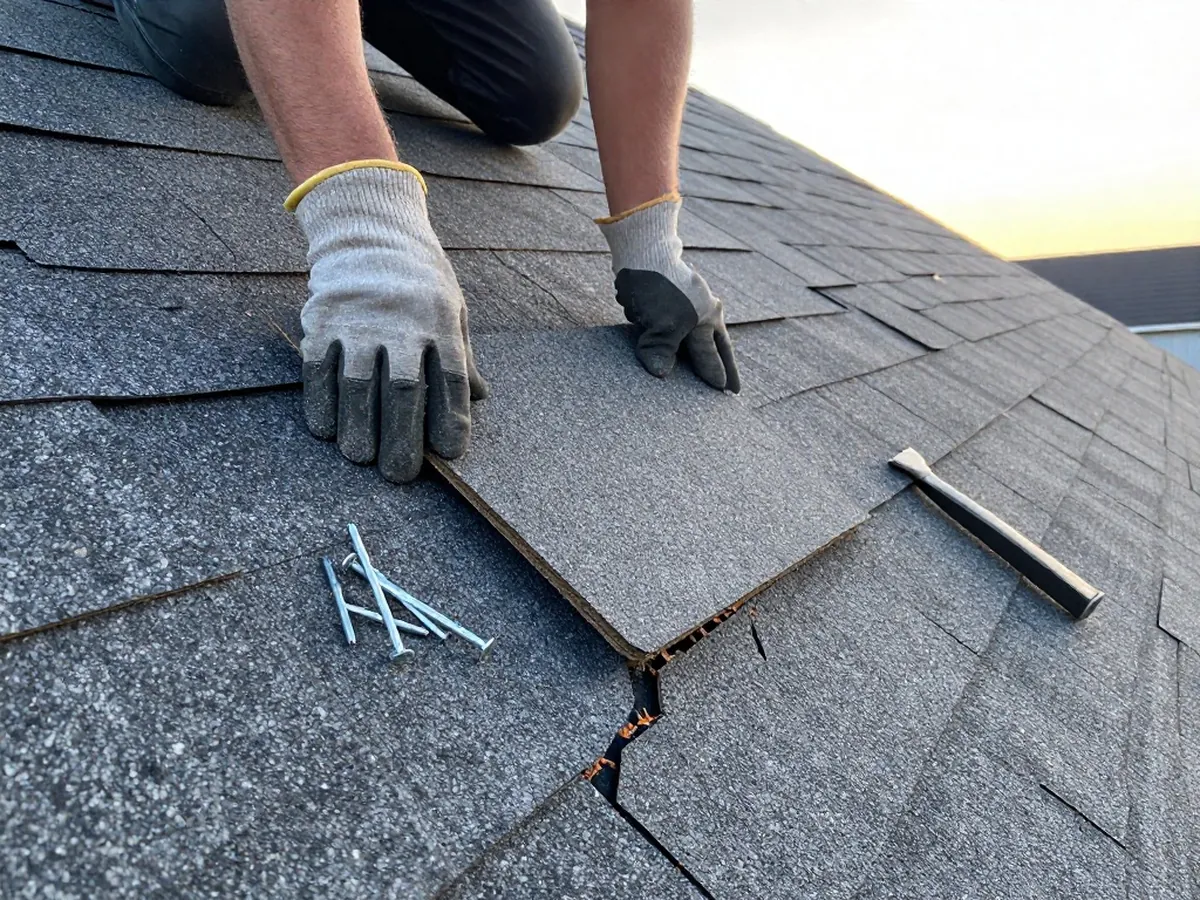
A Department of Energy technical brief quotes the Journal of Light Construction field guide: once over a tenth of the old roof needs repair, it recommends a new roof. The brief is from January 2006 and describes a rule of thumb, not a law.
Applying it takes a person on the roof. A tenth of a small gable is a few courses of shingles; a tenth of a hip roof with a dormer is a longer list. The roofer measures the damage against the whole.
What a patch leaves in place
A repair works on one layer at a time: a handful of shingles, a strip of flashing, a nail that backed out. The shingles around the repair stay, and so does most of the underlayment beneath them.
FEMA's fact sheet for high-wind regions is a reasonable yardstick for the work itself. It says to use underlayment, to choose roofing nails over staples and to watch roof-to-wall flashing closely. Those are fair questions for any patch.
What a full replacement touches
A replacement takes the shingles off and puts the deck in front of a roofer's eyes. Underlayment, drip edge and flashing at chimneys and walls are all up for redoing at that point, and the shingle class can be chosen against the wind speed in the code.
The National Park Service puts flashing failure among the usual major causes of roof deterioration, which is why the flashing deserves a line in any replacement plan.
Signs that lean each way
Leaning toward a patch: damage in one spot, a stain that appeared after a single storm, a roof of an age that suits the shingles still on it, healthy shingles all around the problem.
Leaning toward a new roof: stains in more than one room, bare patches on several slopes, curling across a whole slope, repairs piling up in the same place. These are cues for the conversation, and the roofer makes the call after seeing the roof.
Winter can change the answer
New shingles do not cure an ice dam. The Building America Solution Center traces dams to heat escaping from the house, and puts air sealing first, then insulation, then ventilation. A roof replaced without any of that can grow ice at the eaves again.
Newark's low is at or below freezing on 22.6 January days and 20.0 February days in NOAA's normals, so a replacement planned this season can include a look at the attic.
What to have in writing either way
New Jersey's home improvement rule asks for a written contract above $500, which spells out the work, the main materials, the price and the schedule, with changes signed by all parties. The trade group advises wariness toward money up front.
Whichever path you lean toward, call (862) 358-4524 and describe the roof. In rental housing the decision rests with the landlord or property manager, so start there.
Have these ready
Have your street address, the room where water shows and a rough roof age ready, then call (862) 358-4524. Tenants: tell the landlord or property manager before a roofer is involved. Served: Maplewood, South Orange, West Orange, Millburn, Irvington and Union.