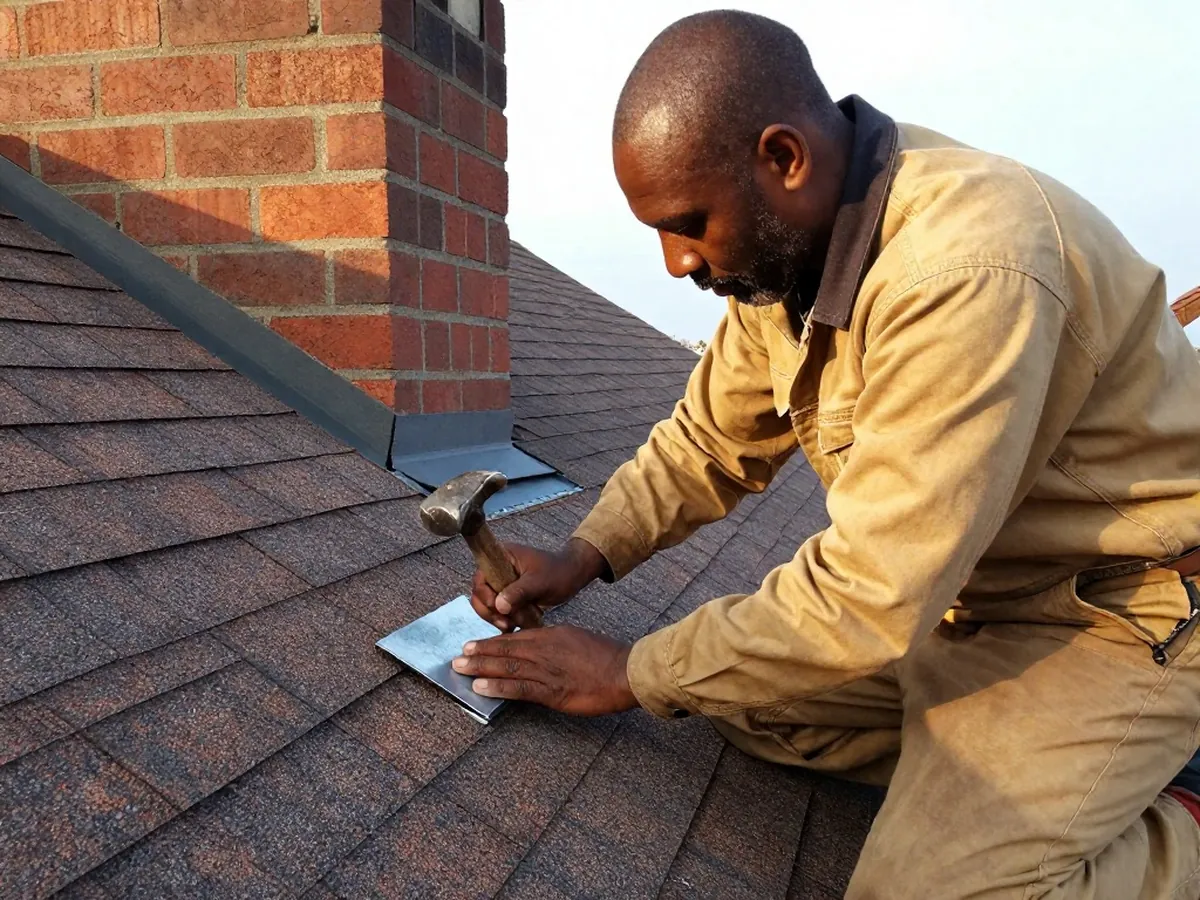
The layers, from the top down
- Shingles
What it doesShed most of the rain and take the wind
What trouble looks likeMissing, creased or curled pieces, grit at the downspouts
- Underlayment
What it doesA water-resistant sheet under the shingles as a backup
What trouble looks likeStains with no shingle damage above them
- Roof deck
What it doesBoards or plywood that carry the nails of every layer above
What trouble looks likeA sag or a wave in the roof line
- Flashing
What it doesMetal that seals the joints at chimneys, walls, valleys and vents
What trouble looks likeStains beside a chimney or a wall
- Gutters and downspouts
What it doesCarry water off the edge and away from the house
What trouble looks likeOverflow, sag, pooled water at the foundation
- Attic air sealing and insulation
What it doesKeep house heat out of the roof space
What trouble looks likeIce at the eaves, frost or damp on attic boards
The shingle layer takes the first hit
Asphalt shingles date to the 1890s, according to the National Park Service, which calls them common substitutes for wood shingles, slate and tile. Their job is to shed rain and stand up to wind.
FEMA's fact sheet for high-wind regions says to select shingles with a class rating at or above the wind speed in the building code. The classes run D at 90 miles per hour, G at 120 and H at 150. The sheet adds that ratings help with comparing products but are not a performance promise.
Underneath, a backup sheet
Beneath the shingles lies underlayment, a water-resistant sheet that catches what gets past them. FEMA's fact sheet is blunt about it: always use underlayment.
The same sheet says to drive roofing nails rather than staples, and shows six nails per shingle along the eave. When a stain appears with no visible shingle damage above it, the backup sheet is one of the first things a roofer wonders about.
The boards everything hangs on
The roof deck is the boards or plywood the underlayment and shingles are nailed to. FEMA says nails need to reach through the underside of the sheathing or at least three-quarters of an inch into plank decking.
A deck carries weight as well as holding nails. The roofing trade group notes that standing water on a flat roof adds load to the deck, which is one reason a low spot that never drains deserves attention.
Metal at the joints
Flashing is the thin metal at chimneys, walls, valleys and vents. The National Park Service puts flashing failure among the usual major causes of roof deterioration. The roofing trade group calls the flashings the most vulnerable points when checking the attic side of a roof.
At a chimney, the Building America Solution Center describes upper pieces of counterflashing tucked into the mortar joints, overlapping base flashing nailed to the roof deck. Water that gets past the first layer meets the second.
Gutters finish the trip
Gutters and downspouts carry the water off the roof edge. Rutgers figures that 500 gallons come off an 800-square-foot roof area in a one-inch rain, all of it through one downspout.
Where that water goes next matters. Rutgers and the EPA both point to ground, a lawn, a garden or a rain barrel, where it can soak in. The EPA also warns that a downspout aimed at a driveway sends water to the street.
Air in the attic changes the story in winter
Ice dams start in the attic. The Building America Solution Center says heat escaping from the house warms the roof deck, melts the snow above it and sends meltwater to the cold eave, where it refreezes. Air sealing the ceiling plane comes first on its list, then insulation, then ventilation.
A University of Massachusetts article recommends ceiling insulation of at least R-38 in the northern states and soffit-to-ridge ventilation. The Department of Energy brief adds a plain line: it pays to spend time sealing air leaks in the attic.
Which layer is the one that needs a roofer?
Any layer that shows damage from the ground or the attic hatch is worth a call. A shingle problem points to leak and shingle repair, a joint problem to chimney flashing, and a pattern across slopes to a new roof.
Call (862) 358-4524 and describe what you saw and where. If you rent, tell the landlord or property manager first.