When patches stop holding on Maplewood roofs
A New Roof in Maplewood, NJ
A new roof in Maplewood, NJ comes into view when patches multiply: stains in several rooms, bare patches on more than one slope or shingles that crumble at the edges. Call (862) 358-4524, describe the roof and its age, and the contractor can explain what replacing it involves.
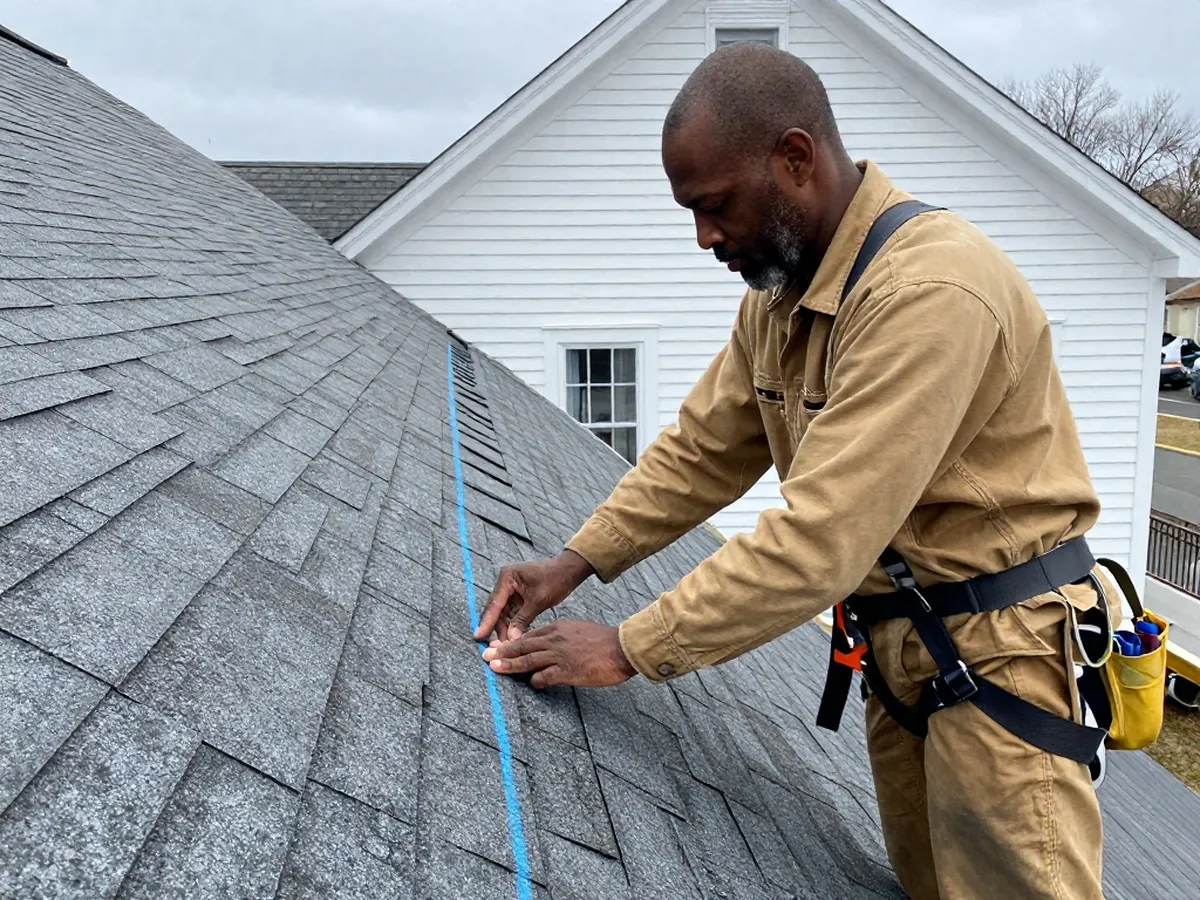
Have these ready
What a roofer asks about a whole-roof job
- The roof's age and how many layers sit on the house, if anyone knows.
- Which slopes leak, and which rooms show the stains.
- Whether the attic is insulated, vented or finished.
- Chimneys, skylights, dormers and any addition with a flatter roof.
- Photos of each slope from the yard.
How soon is soon
Wear is slow; water is not
A sagging ceiling, sparks or smoke, a wire down
Step back, then phone 911 or the electric utility before anything else
Stains in several rooms, or shingle surface coming off in handfuls
Call (862) 358-4524 this week and name every room that is affected
An old roof with no leaks yet
Photograph each slope now and again after winter, then compare
Get away and call for help if
- A ceiling that sags under a roof leak: keep everyone clear of it and call 911.
- Shingles or boards hanging loose above a door or walkway: stay off that side of the house and call 911 if they look ready to drop.
- Sparks, a burning smell or smoke from a wall or fixture beneath a wet roof: leave the house and call 911.
- A wire sprawled across the yard or hanging at the roof edge: keep back and report it to 911 or the electric utility, with PSE&G at 1-800-436-7734.
Five questions
Questions this job brings up
When does a roof stop being a repair job?
Roofers lean on a yardstick that a Department of Energy brief takes from a trade journal: past a tenth of the old roof needing repair, replacement is the recommendation. A roofer applies that tenth to your roof, slope by slope.
Do shingles carry a wind rating?
FEMA's fact sheet lists classes D, G and H, rated for 90, 120 and 150 miles per hour under UL 2390. It says to choose a class at or above the wind speed in the building code, and adds that ratings help compare shingles but are not enough on their own.
What goes under the new shingles?
FEMA's fact sheet for high-wind regions says always to use underlayment, to choose roofing nails over staples, and to watch the flashing at every spot where roof meets wall. It also calls for dabs of roof cement along a metal drip edge before the edge shingles are set.
Does a light-colored roof suit New Jersey winters?
The Department of Energy says reflective roofs save the most in hot climates and can raise heating bills in colder ones through a winter heating penalty. It adds that a cool roof may not pay off when that penalty is bigger than the cooling savings.
Does this cover South Orange, West Orange and the others?
Yes. The contractor covers Maplewood and the five towns around it. South Orange roofing, West Orange roofing, Millburn roofing, Irvington roofing and Union roofing all have pages of their own. Renters tell the landlord first; owners can call (862) 358-4524 and give the street address and roof age.
Looks from the ground
Stick to looks taken from the yard, a window or the attic hatch. Anything that needs a ladder or a walk across the roof belongs to a roofer.
- Stand across the street and sight along each slope. A dip in the line can mean the boards below have gone soft.
- Count the slopes that show bare patches or curled edges. Damage on one slope is a different job from wear on all of them.
- Dig out the paperwork from the last roof job: the invoice, the shingle name, the date. A roofer can read the roof's age from it.
- Check the attic for daylight and for stains on the roof boards, staying on the hatch ladder.
Questions for the roofer
Questions that sort one proposal from another
Ask what happens to the underlayment and whether the boards beneath get a look once the old shingles are off. Ask how the flashing at chimneys and walls will be handled, and which nails go in.
Ask whether the shingle's wind class is named, who hauls away the old material, and what the paperwork says about start and finish dates.
What you might notice
What you might notice
- Stains in more than one room, or a stain that comes back after repairs
- Dark or bare patches where the shingle surface has worn away
- Shingles curling at the corners or cupping across a whole slope
- A sag or wave in the roof line when seen from across the street
- Repair after repair on the same slope over a few seasons
Moves that backfire
Where replacement jobs go sideways
- Paying the whole amount before work starts.
The roofing manufacturers' trade group, after Superstorm Sandy, urged care with a contractor who wants the money before the work starts.
- Signing at the door on the spot.
Federal rules give a three-day window to cancel certain sales made at home, though the rule leaves out emergency sales and visits you requested for repair or maintenance.
- Settling for a spoken scope.
A roof job over $500 is supposed to be in a written contract that names the materials and the dates.
Where the paperwork lives
What the state says about a full tear-off
A state alert of 5 March 2018 lists total reroofing as ordinary maintenance for a detached one- or two-unit house: no permit application and no inspection. Maplewood's own list of permit items names "Replacing a roof," so ask its Construction Division before assuming either way.
The 2024 model codes were adopted on 17 August 2026, and applications filed under the older codes are accepted through 17 February 2027. The rules page lays out the whole picture.