Ice ridges along the eaves, and stains underneath
Ice Dam Damage in Maplewood, NJ
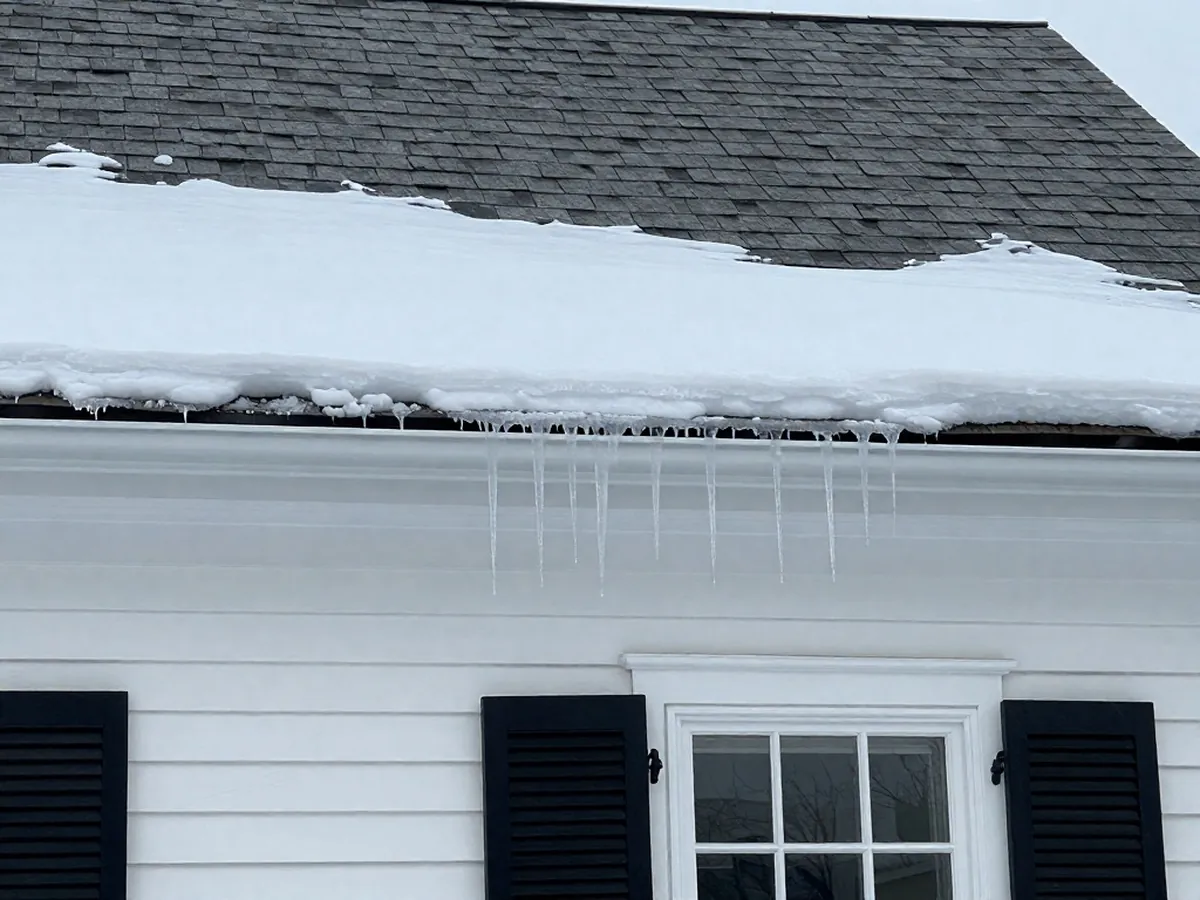
A ridge of ice along the eave, icicles past the gutter or a winter stain near an outside wall is how ice dam damage in Maplewood, NJ announces itself. Call (862) 358-4524, tell the contractor where the ice builds and what shows inside, and the contractor can describe what a look at the roof edge involves.
Have these ready
What to say about the ice
- Which side of the house grows the ice and how far it reaches.
- Which rooms sit beneath that edge and what shows on their ceilings.
- How long the ice has been there and whether a thaw came.
- What you know about the attic insulation and any recent work up there.
- Dated photos from the ground.
How soon is soon
Ice at the eaves: a dial for the thaw
A bulging or sagging ceiling, a wire down, ice ready to slide
Keep away from it, then call 911 or the electric company
Water getting inside during a thaw, or gutters bent by ice
Call (862) 358-4524 this week and tell the roofer where the ice sits
Icicles, or a ridge of ice above a dry ceiling
Photograph it, watch for stains, and mention it on a later call
Get away and call for help if
- Ice or snow that could slide off above a door or a walkway: keep people and animals clear of the drop zone.
- A ceiling that sags with trapped water: step away from beneath it and call 911.
- Do not whack at ice with a hammer, and do not set a ladder on snow or ice. Footing that slick sends climbers to the hospital.
- A wire brought down by ice or a heavy limb: keep 30 feet between you and it, then give PSE&G (1-800-436-7734) or 911 the location.
Five questions
Questions this job brings up
What makes an ice dam form?
The Building America Solution Center says it takes snow on the roof and a roof deck warmed above freezing from below. Heat escaping from the house supplies the warmth, and the meltwater refreezes where it reaches the cold eave, building a dam that can push water under the roofing.
Does heat tape stop ice dams?
A UMass Amherst building-technology article says an electric cable creates an ice dam just above itself, and notes that heat tape can embrittle shingles and add a fire risk. It points to air sealing, insulation and ventilation as the real remedies.
Is an ice barrier under shingles required in New Jersey?
A state bulletin ties the ice barrier rule to places whose average daily temperature in January is 25 degrees or lower, and the one New Jersey area it names is Sussex County. With a January mean of 32.8 degrees at Newark, Essex and Union fall outside that bulletin.
Is raking snow off the roof worth the trouble?
The university article says careful removal with a roof rake helps, though scraping can strip the protective granules off asphalt shingles. A rake works from the ground. Climbing onto a snowy roof to clear it is a roofer's job.
Is ice dam work offered across the six towns?
Yes. The contractor covers Maplewood and the five towns around it. South Orange roofing, West Orange roofing, Millburn roofing, Irvington roofing and Union roofing all have pages of their own. Call (862) 358-4524 and tell the contractor which side of the house grows the ice.
Looks from the ground
Stick to looks taken from the yard, a window or the attic hatch. Anything that needs a ladder or a walk across the roof belongs to a roofer.
- From the yard, photograph the ice and note the date, and note which side of the house it builds on.
- At the attic hatch, look at the insulation near the eaves for gaps, thin spots or flattened areas. Stay on the hatch ladder.
- During a thaw, check the ceilings beneath the eaves for fresh marks.
- Notice whether snow melts first above heated rooms. Bare patches on a snowy roof hint that house heat is reaching it.
Questions for the roofer
Questions that go past the shingles
Ask whether the roofer looks at the attic side for air leaks, thin insulation and ventilation, since the Building America guide puts those first. Ask what is planned for the shingles and flashing the ice damaged.
Ask about self-adhering membranes at the eaves, which the same guide says give good protection in ice dam-prone areas.
What you might notice
What you might notice
- A thick ridge of ice along the roof edge above the gutter
- Long icicles hanging past the gutters on one side of the house
- A ceiling or wall stain near an outside wall during a thaw
- Frost or damp patches on the attic boards close to the eaves
- Gutters bent, cracked or pulled loose after a hard freeze
Moves that backfire
Shortcuts that backfire on ice
- Running heat tape along the eave.
The cable can start a second dam higher up.
- Scraping with a shovel.
It can strip the granules off the shingles beneath.
- Putting a ladder on ice or packed snow to reach the edge.
- Treating only the shingles while warm air keeps leaking into the attic.
Where the paperwork lives
Ice barrier rules, plainly
The state bulletin on ice barriers kicks in at an average daily January temperature of 25 degrees or lower, and Sussex County is the only New Jersey area it names. Mending ice damage to a stand-alone one- or two-family house's roof covering still counts as ordinary maintenance.
The rules page covers who answers questions in each town.